Books are places along the way just as reading is transportations as well as an unrelenting vice. Bora Cosic (an unfamiliar writer but one with whom I share reading habits and books and am now encouraged more like compelled to explore) writes about the reading practices of a number of writers, most if not all European, as well as interweaving comments about his own throughout.
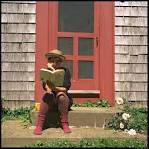
But I am not alone. I have read books that no one else has read, says Paul Valéry. Books from technical disciplines, these interest me. Balzac systematically read dictionaries, not specific entries but from start to finish, as if following a narrative. How many interesting things there are to read, which at first glance might seem irrelevant and meaningless. One woman expected Erasmus to write something that would help her husband get a grip on himself, tells Roland Barthes. Or as Claudio Magris mentions, Montecuccoli wrote his aphorisms on the art of war in a Stettin prison, during his hiatus from the Thirty Years War. Were I a poet, I would dedicate the most beautiful poem to roux soup, admits Bela Hamvas. "A Meditation Upon a Broomstick" is the title of an essay by Swift. I would give everything to find out what a German wrote about a lemon peel, as Rousseau says, what Erasmus wrote to bring a neurotic man to reason, or Montecuccoli's "Art of War".

Reading has only recently become a silent act. Two hundred years ago everyone read aloud.
'via Blog this'


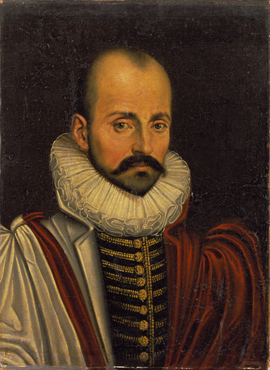 The weekend newspapers are full of them. Our computer screens are full of them. They go by different names—columns, opinion pieces, diaries, blogs—but personal essays are alive and well in the twenty-first century. They flourish just as they did in James Thurber’s and E. B. White’s twentieth-century New York, or in the nineteenth-century London of William Hazlitt and Charles Lamb. There seems no end to the appeal of the essayist’s basic idea: that you can write spontaneously and ramblingly about yourself and your interests, and that the world will love you for it.